
Building Water, Building Community: EWB Caltech in Ecuador
In May 2026, four of our members traveled to Ecuador for a week to implement our designs and solutions for the community. From laying new pipe to building a new groundwater catchment, we were able to successfully complete our implementation phase of the project. Follow along to see what we did in Ecuador each day!
Saturday, May 9, 2026
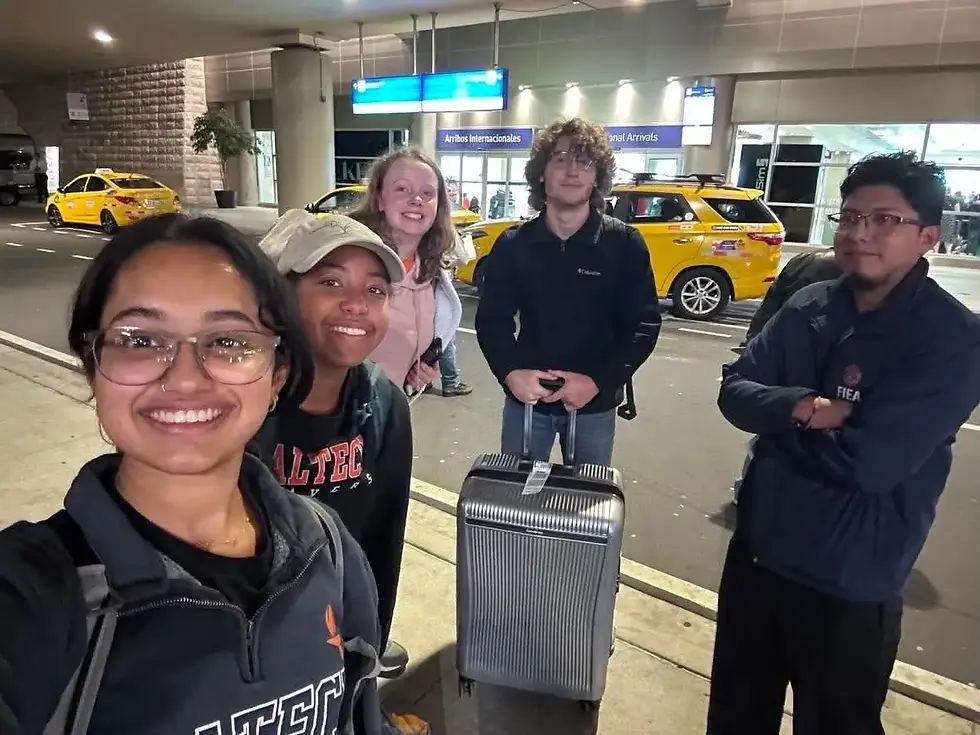
Saturday was our travel day to Ecuador! Our flights from Los Angeles to Miami and Miami to Quito were long, but we slept through most of it (especially after having to wake up super early). We landed in Quito at around 9 pm, where we were greeted by members of FIEA Ecuador, the engineering organization we have been working with. After getting some dinner and heading to the hotel, we were ready to sleep and get ready for the next day!
Sunday, May 10, 2026
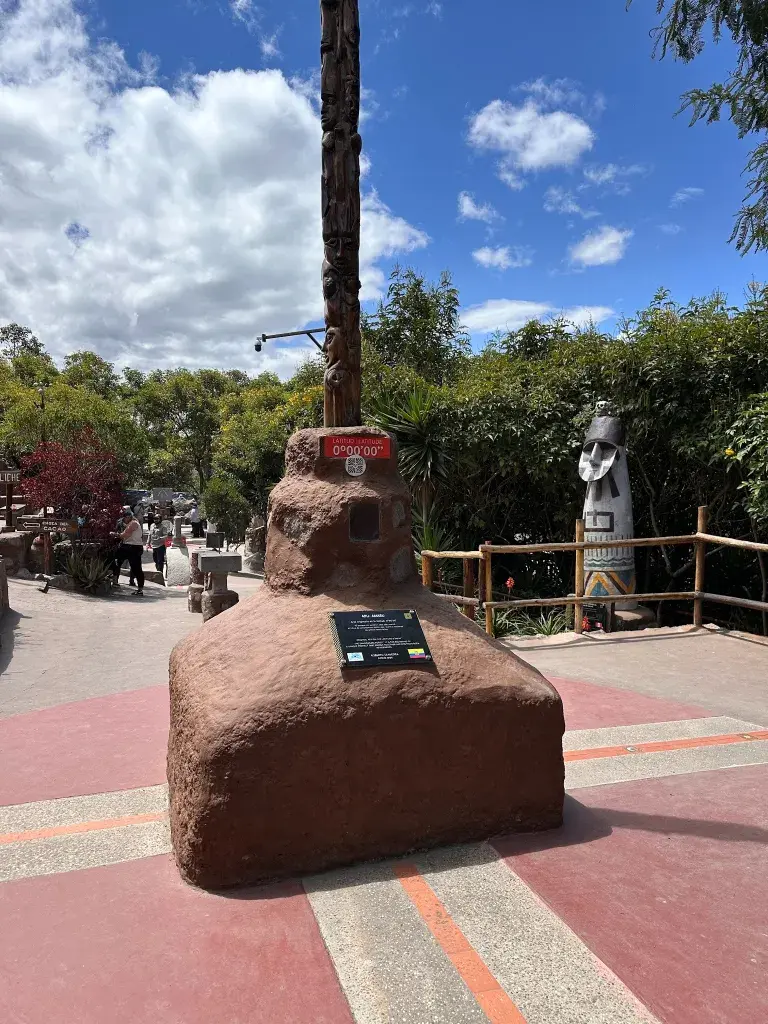
Sunday was our first official day in Ecuador. In the morning, we met our three engineering travel mentors, who flew in all the way from Indiana to assist us with our project. Because the city of Quito has an elevation of 10,000 ft, we were advised to acclimatize to the altitude for a day before beginning any work in the community. Therefore, we then spent the day sightseeing and exploring Quito! We visited Mitad del Mundo, which translates to “Middle of the World”—here, we were at the equator line, where the latitude is 0. We also visited Mercado Arsenal La Mariscal, a market with a bunch of cute souvenirs. I definitely indulged in the souvenirs, where I bought some threaded bracelets, a t-shirt, a sling purse, and of course chocolate (which Ecuador is famous for).


Once we toured the city, we headed to Tandacato (a two-hour drive from Quito). We were welcomed into the town meeting, and all the community members were really excited to meet us and begin working on the project!

Monday, May 11, 2026
Monday was the first time we all got to visit the work site and begin assisting with construction. We were greeted by members of the community who were helping with manual labor, and they gave us each a bag of fresh fruit to snack on throughout the day. Every day, we got to eat a different fruit, from bananas to pears to strawberries to passion fruit (which I tried for the first time!).
In the morning, we hiked up to the catchment area (where groundwater is collected). The first part of our project involved building a new catchment, since the previous one was buried after a few landslides. We took some flow rate measurements here to collect some qualitative data.

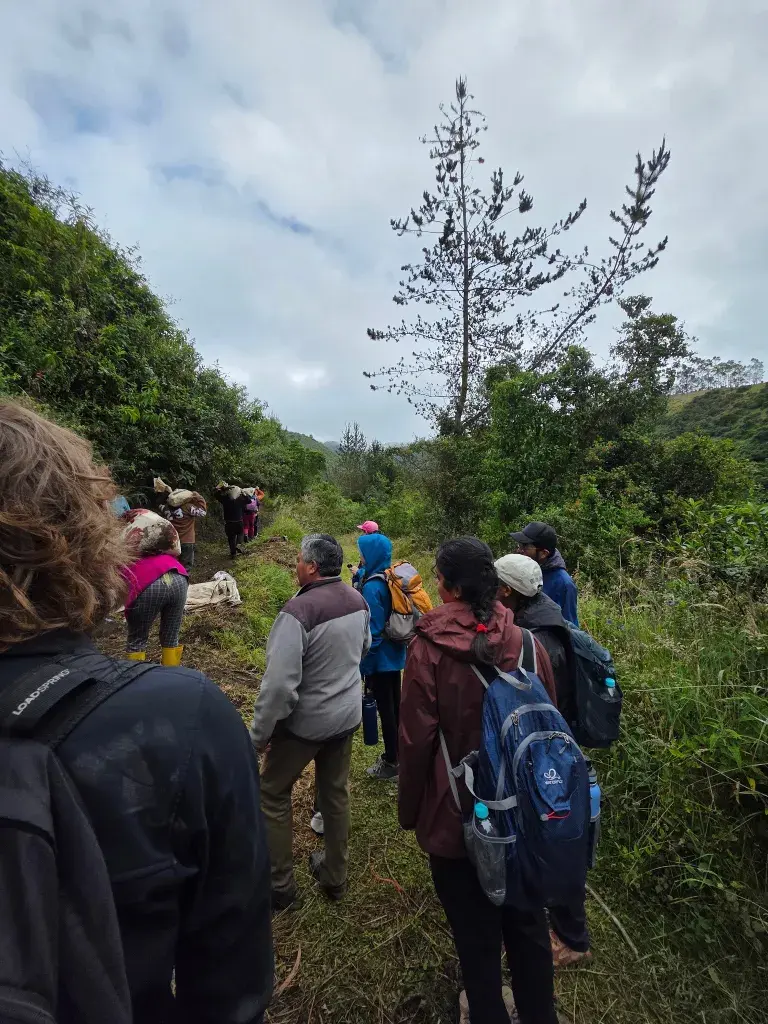

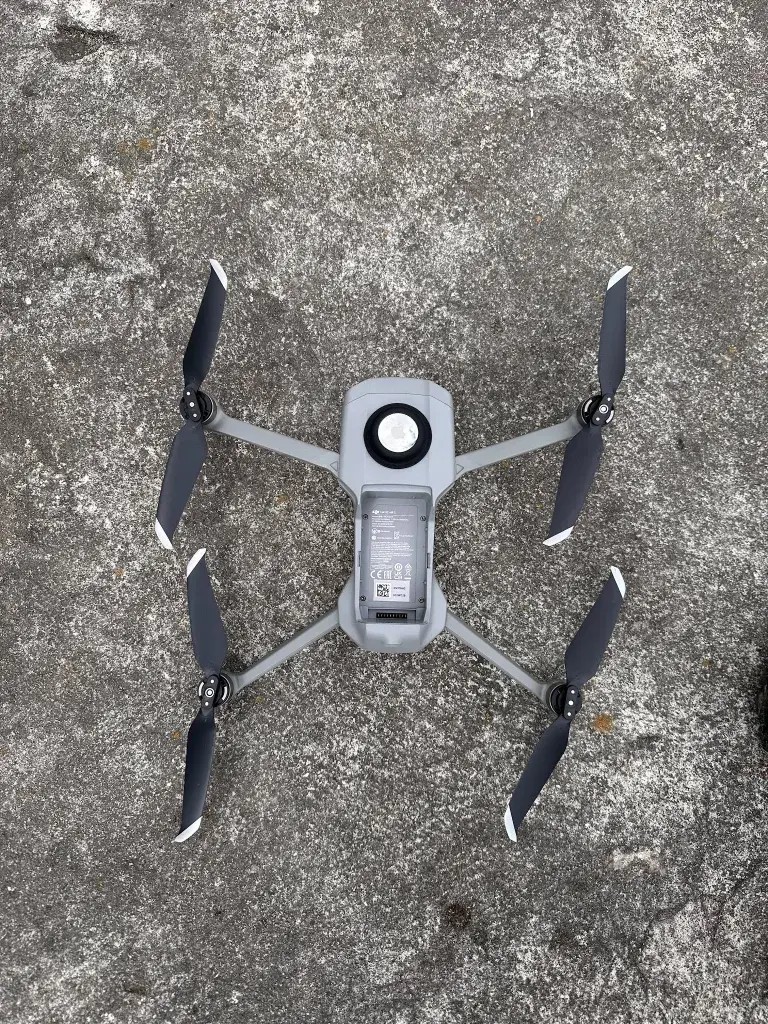
We then visited the upper storage tank, which is where a large amount of the community’s water is stored before being distributed by the pipeline system. We climbed into the tank to observe the water flow (pictured below) and even collected some drone footage of the area! My friend and I borrowed a drone from a lab at Caltech before the trip and learned how to fly it, and it was perfect to get some aerial views of the work being done.


After we visited the tank and took a quick lunch break, we began laying down new pipes in the trench between the upper and lower tanks. The second part of our project involved replacing about 2.5 km (about 1.55 miles) of HDPE pipe from the tanks to the community, since a lot of the previous pipe was cracked and allowed debris to flow in. Each pipe was 100 m long, and it was definitely challenging to roll out. With a lot of assistance from the community, we were able to lay 400 m of pipe. Overall, a very productive first work day!


Tuesday, May 12, 2026
Today we continued laying pipe in the trench, extending the system as far as the trench had been dug up. The community used a backhoe machine to dig up the soil along the side of the road to place the pipe in, and we were able to observe that process. Another challenge we faced was connecting the pipes with the proper pipe fittings. We had to ensure they were tight enough not to leak water while making sure it wasn’t damaging the pipe itself. After a few hours, we finished all the pipe fittings between the upper and lower tanks.


After lunch, we once again visited the catchment site, where the concrete retaining wall (used to protect the pipe) was already built. We spent this time collecting data and taking measurements of the area. It was really cool to see our designs come to life!


Wednesday, May 13, 2026
Wednesday was spent fixing some issues that arose during construction. Some parts of the trench were already backfilled with soil before the pipe fittings were installed, so some of the pipe spacings didn’t work—therefore, some sections required double fittings.
We also made a lot of progress with laying pipes in the trench! We were now halfway between the lower tanks and the community, which means we only had about 600 m of pipe to complete. One of the trenches was blocking the entrance to someone’s home, so we had to expedite our work and backfill the trench so the residents could access their home. We also captured some drone footage of the pipeline during this time.


Additionally, for the first time on this trip, we were able to see a clear view Cotopaxi (one of the largest active volcanoes in the world!). Its top was covered in snow, and it was a beautiful sight.
Thursday, May 14, 2026
Thursday was probably one of our most productive days. We spent most of the morning at the lower two tanks, which are adjacent to each other. We took detailed measurements of the tanks, including their inner and outer dimensions as well as the depth of the water (to calculate the total volume of the tank and the volume of the water). We also learned about the chlorination process currently used! One aspect of our project was to supply the community with a proper chlorination guide so they can treat their water safely.


In the afternoon, we hiked up to the first catchment area. The catchment was completely built, so we were able to conduct some water tests to assess its turbidity, pH, and other quantities. We noted that the water quality was much better than the previous catchment, which was a great success!
We then hiked up to the second catchment, which is another source of water for the community. We conducted some water quality tests and noticed that the water quality was much worse here. The community was discussing fixing this water catchment in the future, which is something we may consider for a second phase of this project.


Friday, May 15, 2026
Unfortunately, on Friday, some of us (myself included) felt sick, possibly from a change in altitude environment. We stayed back in the hotel to rest, while the rest of the team finished laying most of the pipe from the lower tanks to the communities. A lot of time was also spent reconfiguring the pipes to the upper tank and measuring its new flow rate with water from the new catchment. The pipes were also connected to the lower tanks, and a shutoff valve was also installed in this area.


In the afternoon, the rest of us also arrived at the community for a community celebration filled with music and dancing. Here, were honored with a plaque for all of our hard work. The community was really grateful for our help in building a new water system for them, and it was amazing to see the effects of years of efforts.

Saturday, May 16, 2026
On Saturday, our last day in Ecuador, some members of our team helped install a float valve into the lower tanks so they wouldn’t overflow and waste water. Since our flight back to Caltech was later that day, we left the hotel in the early afternoon and made our way to Quito. We stopped for a late lunch at a restaurant, and soon arrived at the airport. While waiting for our flight, we spent the time by filming some silly Instagram reels (which you can see on our Instagram page @ewb_caltech!). Our flight was a red-eye, so we arrived back on campus on Sunday, May 17th.
Going to Ecuador with Caltech EWB was an unforgettable experience. It was incredible to meet the community and create real change in the world. It is truly a once-in-a-lifetime opportunity to be a part of this team, and I am so grateful for all of our engineering mentors, Ecuador collaborators, financial donors, and the rest of our travel team for making this trip amazing.


Comments